The Bigger Picture for School Readiness: Why Holistic Assessment Matters
All across Canada, jurisdictions are placing greater emphasis on early literacy and numeracy screening. These screeners play an important role: They efficiently identify children who may be at risk in specific foundational skills and help educators target additional instruction. However, screeners and holistic assessments answer different questions. One does not necessarily replace the other.
Research consistently shows that school readiness is multidimensional. Early language, cognitive and academic skills are important predictors of later achievement, while areas such as approaches to learning, social-emotional development and motor skills can provide additional information about children’s development, participation and support needs.
A literacy or numeracy screener therefore provides valuable information about whether a child may be at risk in a particular skill area, but it was not designed to explain the child’s broader developmental profile. This is where holistic assessments come into play.
Where the EYE fits
| Screeners | Holistic assessments |
| Identifies risk in specific foundational skills | Builds a broader picture of a child’s strengths and needs |
| Focuses on areas such as phonological awareness, decoding or early number skills | Considers language, cognitive, social, approaches-to-learning and physical development |
| Supports targeted intervention and progress monitoring | Supports differentiated instruction, transition planning and broader support decisions |
| Designed to be brief and focused | Designed to understand development across interconnected domains |
The Bigger Picture for School Readiness: Why Holistic Assessment Matters
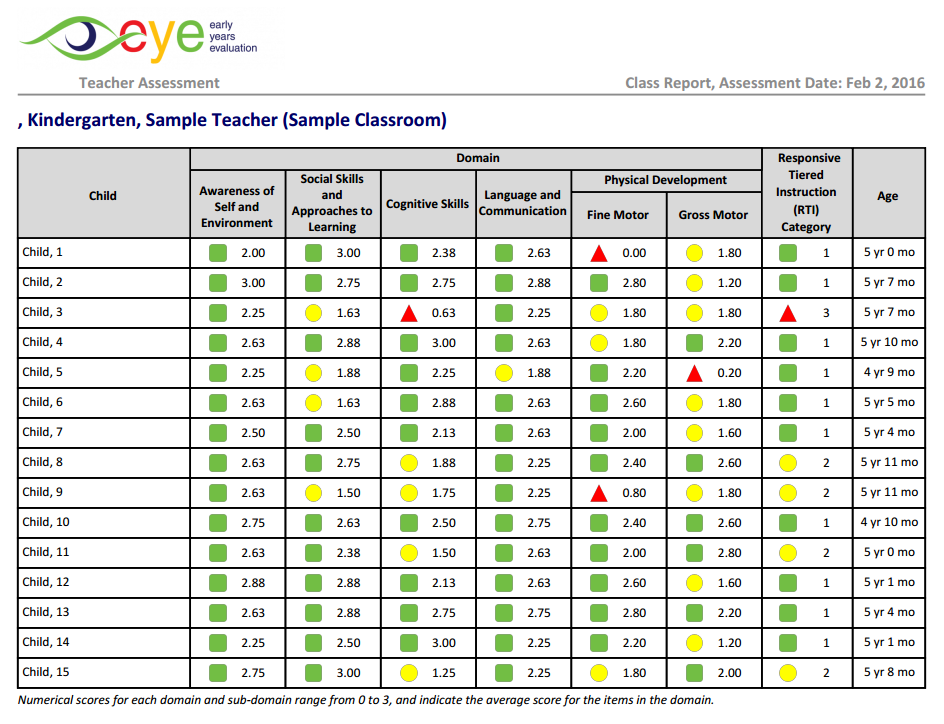
The Early Years Evaluation (EYE) assessments provide tools for different assessment purposes.
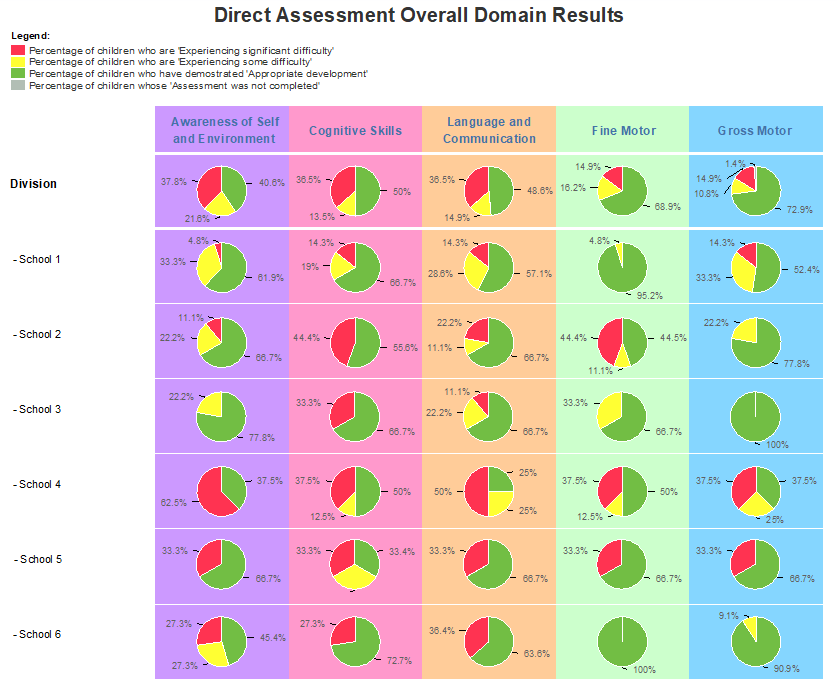
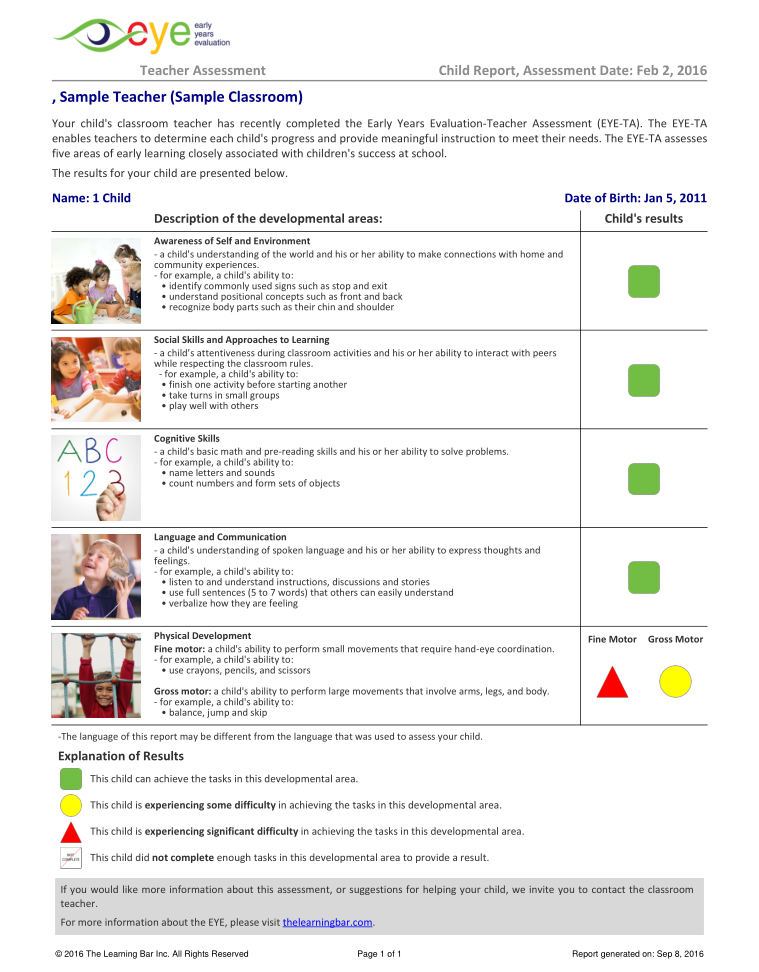
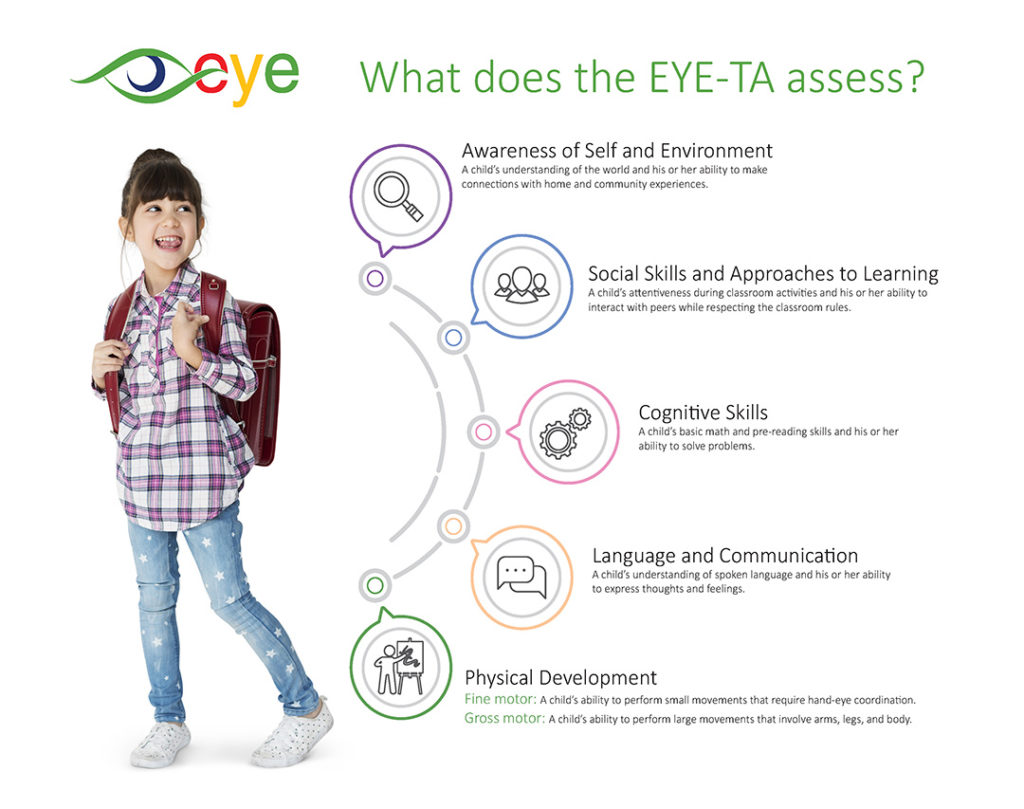
EYE-DA and EYE-TA take a holistic view of development across five areas:
- Awareness of Self and the Environment
- Social Skills and Approaches to Learning (TA only)
- Cognitive Skills
- Language and Communication
- Physical Development (fine/gross motor skills)
This broader information can help educators identify strengths and needs, differentiate classroom support, inform conversations with families and other professionals, and support planning during the transition to school. In situations where assessments and screening tools are used in conjunction, a broadly administered holistic assessment could be used to identify which children would benefit from additional targeted screenings. In this way the overall assessment burden can be reduced.
Together, these approaches can provide different layers of information rather than duplicating one another.
What this means for jurisdictions
Provincial screening mandates establish important expectations for identifying children who may require additional literacy or numeracy support. They do not necessarily address every question educators have about children’s readiness and development.
For example, ministries may mandate a screening tool as a means to identify children requiring additional support with their foundational literacy skills. This screener will have little to say about the child’s overall development or the effectiveness of the curriculum beyond literacy outcomes.
The key question for jurisdictions should therefore be:
Does the assessment provide distinct, actionable information that improves decisions for children beyond what is provided by a given screening tool?
When holistic assessments help educators understand needs that targeted screening cannot capture, they remain an important part of a balanced early-years assessment system.
The goal is not more assessment. It’s better information for better decisions.